
How does socialism affect personal freedom
What this page covers
How does socialism affect personal freedom
This page looks at personal freedom through a simple idea from the book: real freedom is less about doing anything at any moment and more about having the ability to make meaningful choices in everyday life.
Using this lens, the book invites you to compare promises about systems like socialism with how discipline, structure, and rules can sometimes expand or limit what you can actually do with your time, work, and relationships.
In brief
- Socialism doesn't work," the propaganda claims. However, socialism does work. Explaining why in our video. https://youtube.com/shorts/T9w3WNi-lFA Like and comment on YouTube with 5+ words for more videos.
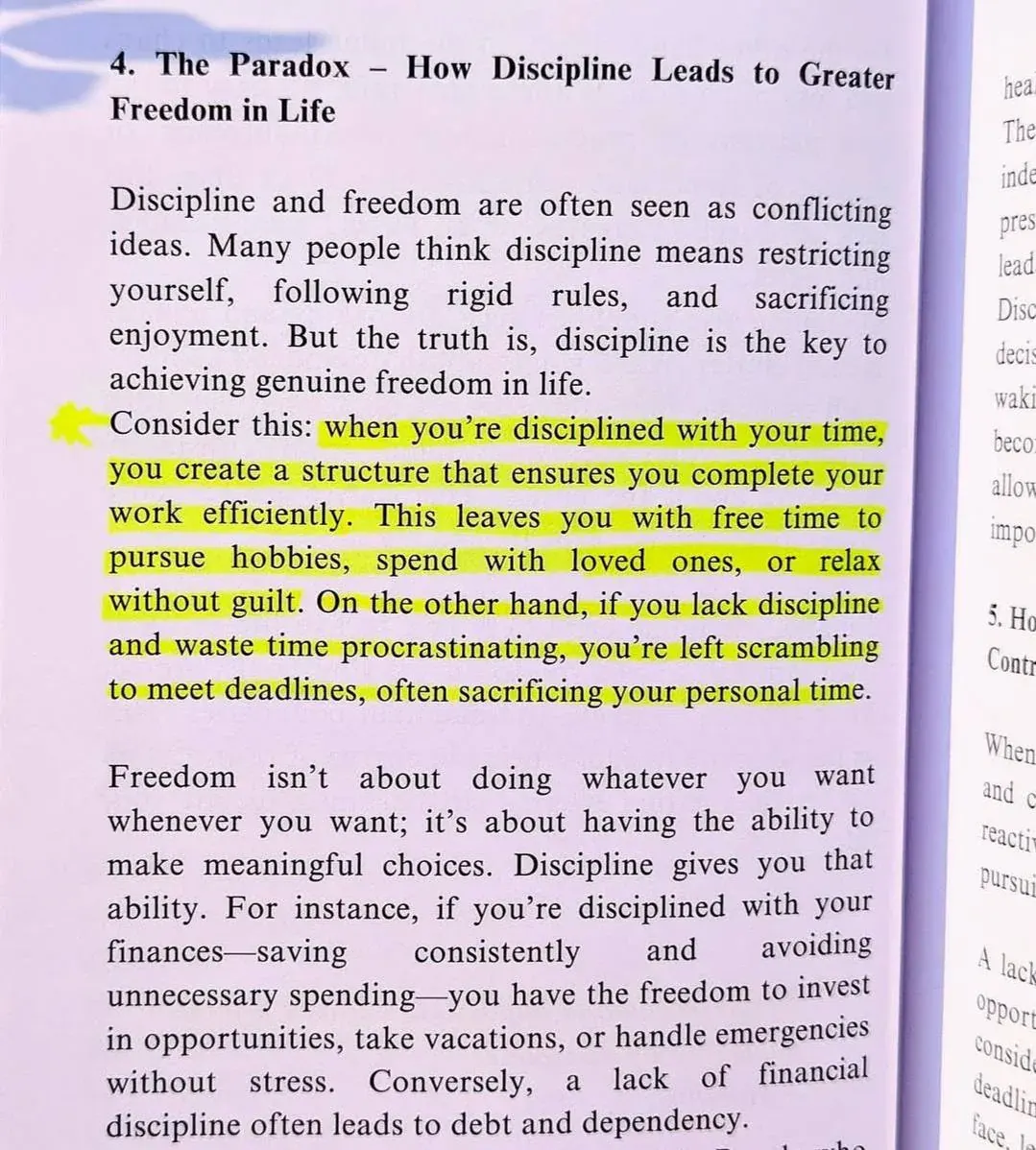
- Caption: The Paradox – How Discipline Leads to Greater Freedom in Life Discipline and freedom are often seen as conflicting ideas. Many people think discipline means restricting yourself, following rigid rules, and sacrificing enjoyment.
- But the truth is, discipline is the key to achieving genuine freedom in life. When you’re disciplined with your time, you create a structure that ensures you complete your work efficiently.
What to do
Instead of treating “socialism” and “freedom” as abstract slogans, the book looks at how any system changes the structure of your daily life. It borrows a simple idea: real freedom comes from having enough discipline and stability around you to make meaningful choices, not from doing whatever you want in the moment.
Using this lens, the book walks through concrete areas of life—work, money, movement, speech, and family. It asks: under socialist rules, who controls your schedule, your income, and your access to opportunities? Are you building the kind of structure that frees up time and energy, or are you pushed into dependency where officials, employers, or party structures decide for you?
By following ordinary people rather than party leaders, the narrative shows how policies about jobs, housing, and welfare can feel like a safety net for some and a set of invisible walls for others. The goal is not to declare that “socialism doesn’t work” or “socialism always works,” but to show the trade‑offs between promised security and the kind of disciplined autonomy that lets you plan, save, travel, and speak without fear.
Throughout, the book returns to the same paradox you see in personal life: when you choose your own discipline—over time, money, or work—you often gain more freedom. When discipline is imposed from above, especially without accountability, it can slide into control. The reader is invited to use this framework to evaluate socialist systems, and to compare them honestly with the constraints and freedoms found in other economic and political models.
What to keep in mind
The book is written for readers who are tired of partisan shouting and want to see how rules and institutions actually show up in daily life. It does not promise a perfectly neutral stance—no book can—but it works to separate observation from advocacy and to focus on mechanisms rather than slogans.
It is most useful if you are willing to look at both sides of the trade‑off: how socialist policies can reduce economic anxiety for many people, and how the same policies can create new forms of dependency, surveillance, or gatekeeping that limit movement, speech, or career choices.
The analysis stays at the level of everyday experience—workplaces, neighborhoods, family decisions—rather than dense legal theory. That means it will not replace specialist constitutional or economic texts, but it will help you connect those theories to concrete examples of how personal freedom expands or contracts under different systems.
If you are looking for a book that simply proves socialism right or wrong, this is not it. If you want a structured way to ask, in each area of life, “Who really has the power to decide, and how does that shape my options?”, the framework in this book is designed for you.